Sorry, no results.
Please try another keyword
00:00
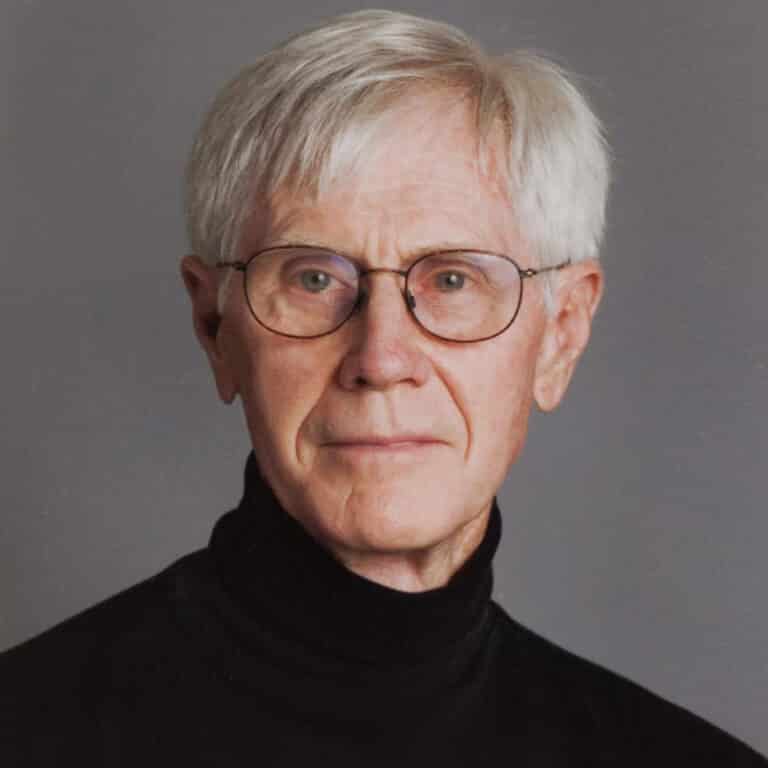

In Episode 149 of Hidden Forces, Demetri Kofinas speaks with Orville Schell, Director of the Center on U.S.-China Relations at the Asia Society about the implications of Secretary of State Mike Pompeo’s monumental speech at the Nixon Library, the history of engagement with China’s Communist Party, and what a New Cold War with China will mean for the future of peace and security.
Dr. Schell’s career as a China scholar spans the entire arch of US-Sino relations since Nixon’s fateful trip to the Middle Kingdom in 1972 and the opening up of China to the world.
The same year (1967) that Dr. Schell earned his master’s degree in Chinese studies an astounding 70 percent of Americans agreed on one thing: the greatest threat to U.S. security was the People’s Republic of China. After fifty years of engagement where relations between the two nations would improve dramatically, Americans are now back to viewing China as an enemy.
A Pew Research Center poll conducted in March 2020 shows that roughly two-thirds of Americans now say they have an unfavorable view of China, the most negative rating for the country since the Center began asking the question in 2005, and up nearly 20 percentage points since the start of the Trump administration. Positive views of China’s leader, President Xi Jinping, are also at historically low levels.
In a recent speech delivered at the Nixon Presidential Library, Secretary of State Mike Pompeo declared the failure of 50 years of engagement with China and called for the free world to stand up against this “new tyranny” in what felt very much like the beginning of a new cold war.
“It’s true, there are differences,” remarked Pompeo, when contrasting China to the USSR. “Unlike the Soviet Union, China is deeply integrated into the global economy. But Beijing is more dependent on us than we are on them.” “I reject the notion,” he continued, “that we’re living in an age of inevitability, that some trap is pre-ordained, that CCP supremacy is the future. . . . If we bend the knee now, our children’s children may be at the mercy of the Chinese Communist Party, whose actions are the primary challenge today in the free world. General Secretary Xi is not destined to tyrannize inside and outside of China forever unless we allow it.”
In their conversation, Orville Schell and Demetri Kofinas discuss the speech, what it means for US-Sino relations, and the implications of disengagement for the US, China, and the world.
You can access the episode overtime, as well as the transcript and rundown to this week’s episode through the Hidden Forces Supercast Page. All subscribers gain access to our overtime feed, which can be easily added to your favorite podcast application.
If you enjoyed listening to today’s episode of Hidden Forces you can help support the show by doing the following:
Subscribe on Apple Podcasts | Spotify | Stitcher | SoundCloud | YouTube | CastBox | RSS Feed
Write us a review on Apple Podcasts
Subscribe to our mailing list through the Hidden Forces Website
Producer & Host: Demetri Kofinas
Editor & Engineer: Stylianos Nicolaou
Subscribe & Support the Podcast at http://patreon.com/hiddenforces
Join the conversation on Facebook, Instagram, and Twitter at @hiddenforcespod
Episode Recorded on 07/29/2020
Orville Schell is the Arthur Ross Director of the Center on U.S.-China Relations at Asia Society in New York. He is a former professor and Dean at the University of California, Berkeley Graduate School of Journalism. Schell is the author of fifteen books, ten of them about China, contributed to numerous edited volumes and has written widely for many magazine and newspapers, including The Atlantic Monthly, The New Yorker, Time, The New Republic, Harpers, The Nation, The New York Review of Books, Wired, Foreign Affairs, the China Quarterly, and The New York Times, the Washington Post, and the Los Angeles Times. Schell was born in New York City, graduated Magna Cum Laude from Harvard University in Far Eastern History, was an exchange student at National Taiwan University in the 1960s, and earned a Ph.D. (Abd) at University of California, Berkeley in Chinese History. He worked for the Ford Foundation in Indonesia, covered the war in Indochina as a journalist, and has traveled widely in China since the mid-70s. He is a Fellow at the Weatherhead East Asian Institute at Columbia University, a Senior Fellow at the Annenberg School of Communications at USC, and a member of the Council on Foreign Relations. Schell is also the recipient of many prizes and fellowships, including a Guggenheim Fellowship, the Overseas Press Club Award, and the Harvard-Stanford Shorenstein Prize in Asian Journalism.
Orville Schell is the Arthur Ross Director of the Center on U.S.-China Relations at Asia Society in New York. He is a former professor and Dean at the University of California, Berkeley Graduate School of Journalism. Schell is the author of fifteen books, ten of them about China, contributed to numerous edited volumes and has written widely for many magazine and newspapers, including The Atlantic Monthly, The New Yorker, Time, The New Republic, Harpers, The Nation, The New York Review of Books, Wired, Foreign Affairs, the China Quarterly, and The New York Times, the Washington Post, and the Los Angeles Times. Schell was born in New York City, graduated Magna Cum Laude from Harvard University in Far Eastern History, was an exchange student at National Taiwan University in the 1960s, and earned a Ph.D. (Abd) at University of California, Berkeley in Chinese History. He worked for the Ford Foundation in Indonesia, covered the war in Indochina as a journalist, and has traveled widely in China since the mid-70s. He is a Fellow at the Weatherhead East Asian Institute at Columbia University, a Senior Fellow at the Annenberg School of Communications at USC, and a member of the Council on Foreign Relations. Schell is also the recipient of many prizes and fellowships, including a Guggenheim Fellowship, the Overseas Press Club Award, and the Harvard-Stanford Shorenstein Prize in Asian Journalism.
or Subscribe to Access Premium Content
Demetri Kofinas is a media entrepreneur and financial analyst whose mission is to help uncover the hidden forces and pivotal patterns shaping our lives. His contrarian perspective and critical-thinking approach has helped hundreds of thousands of people make smarter, informed decisions. This same methodology has helped guide Demetri’s decision-making as an early-stage investor and as a creator of several innovative media properties and live events.